It is something many youth organisations hear when they speak about issues affecting young people.
But here is the reality:
Youth work has always been connected to democracy, participation and helping young people find and use their voice.
That does not mean telling young people what to think or who to vote for.
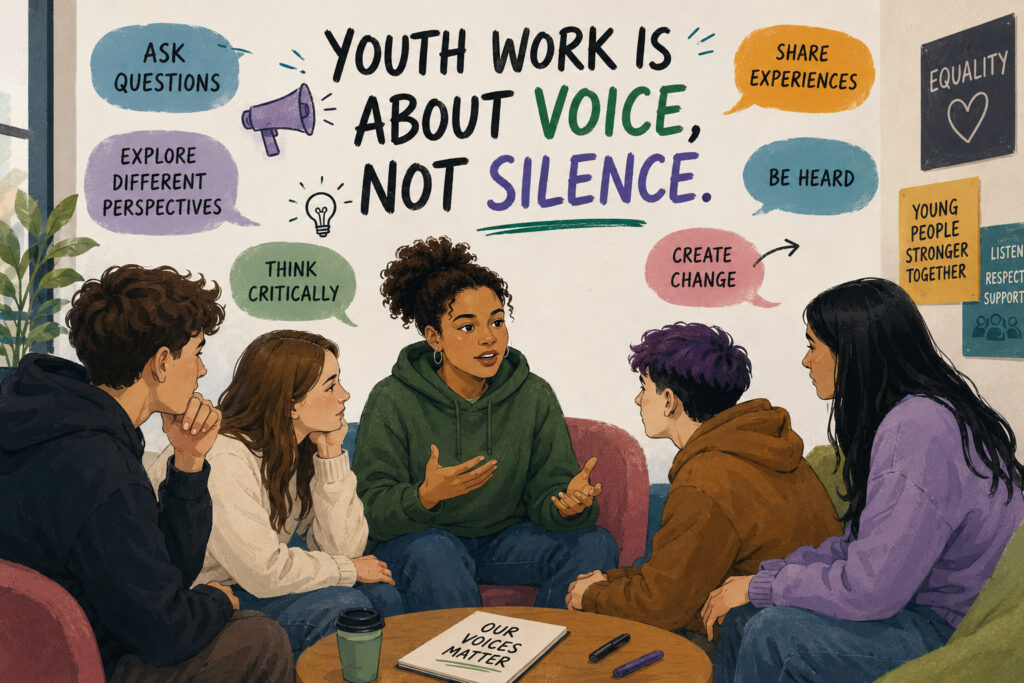
It means creating safe spaces where young people can ask questions, explore different opinions, challenge information, talk about their experiences and develop confidence in their own views.
Young people’s lives are already shaped by politics every day.
Transport. Education. Housing. Poverty. Mental health support. Racism. Employment. Climate anxiety. Community safety.
These are not abstract political debates for young people. They are real life experiences.
If a young person talks about not being able to afford the bus to college, struggling to find work, experiencing discrimination, or feeling unsafe in their community, youth workers cannot simply avoid those conversations because they feel “too political.”
The role of youth work is not to push an agenda.
The role is to help young people think critically, understand the world around them and feel confident participating in society.
This approach is deeply rooted in youth work practice and education theory. Brazilian educator Paulo Freire believed education should help people understand the world around them, question inequality and develop the confidence to create change, not simply memorise information. His work continues to shape youth work today.
The National Youth Agency also describes youth work as a space where young people build confidence, take part in decisions and engage in democracy and society.
Good youth work is not about pressure or judgement.
It is about relationships, trust and conversation.
It is about helping young people:
- understand different perspectives
- recognise misinformation
- ask questions
- build confidence in their own voice
- respectfully disagree
- become active citizens
In a healthy democracy, young people should be encouraged to think for themselves, not discouraged from speaking because their experiences make adults uncomfortable.
Youth work is not becoming political.
Supporting young people to have a voice, think critically and engage with the world around them has always been part of the purpose of youth work.